


 Photo courtesy of Jean MacWhirter Bujold
 1
1 2
2 3
3 4
4 5
5Atlantic Salmon Interpretation Center
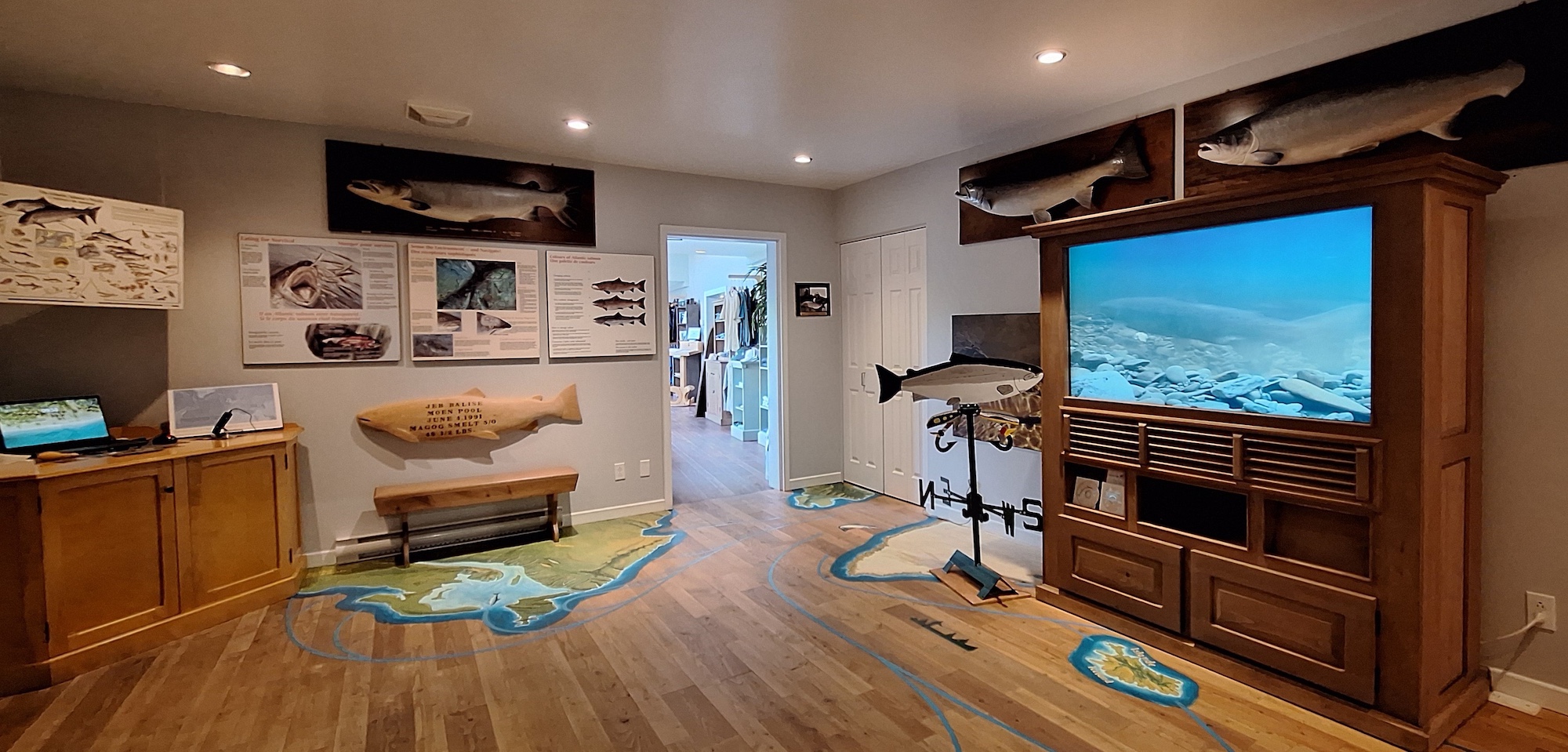
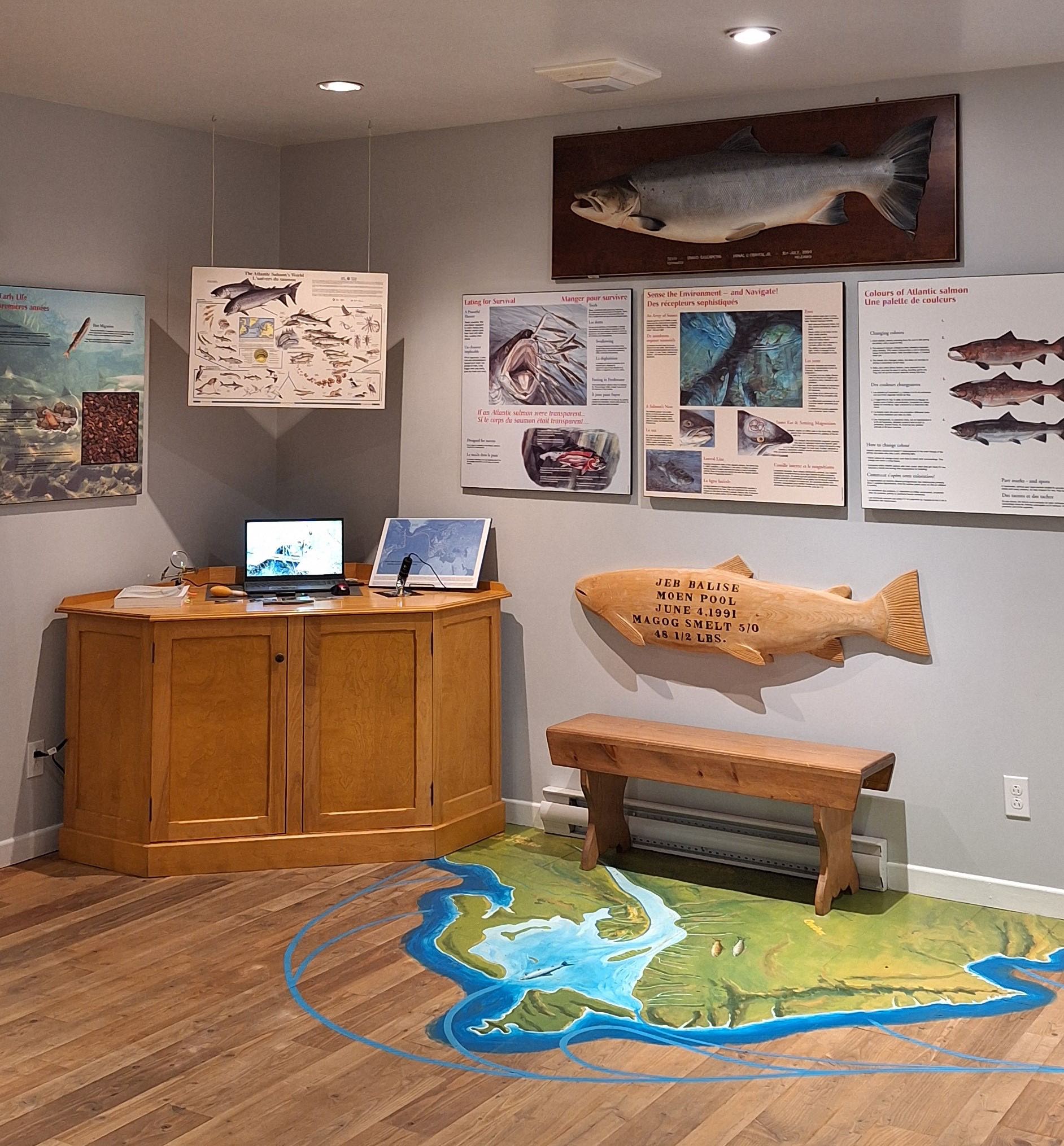
The Atlantic Salmon Interpretation Center is one of the unique highlights of our museum. Visitors can enjoy documentaries on a large-screen television and explore numerous illustrations that showcase the fascinating biology and behaviour of these remarkable fish.
Did you know that:
- Atlantic salmon have an exceptional sense of smell. They use scent memories to locate their home river when returning to spawn. Their scent-detecting organs, called olfactory bulbs, are located in front of each eye.
- Scientists believe Atlantic salmon may use Earth's magnetic field to navigate. Microscopic magnetic particles could help them orient themselves during their long migrations far from land. Further research is needed to determine whether specialized structures exist in the nose area, similar to those found in rainbow trout.
- Atlantic salmon can see in color. Their eyes are remarkably similar to human eyes and are well adapted to the varied light conditions they encounter throughout their lives.
- A salmon's appearance changes during the breeding season. As spawning approaches, their colours become more pronounced. In males, these colours help attract potential mates in their home streams.
- Many Atlantic salmon from both sides of the Atlantic Ocean gather off the west coast of Greenland. There they feed and grow for one or more years before returning to their native rivers to reproduce.
Interested in learning more about these incredible fish? Join us for one of our guided tours and discover the fascinating world of Atlantic salmon!